Several dozen watchtowers and bell towers are placed in different parts of Belgium and France, in the north-west of Europe. These beautiful and majestic city attractions symbolize freedom, independence, financial autonomy, and the huge potential of the places in which they are located. They are united not only by a common idea and place but also by the fact that they are all recognized as UNESCO World Heritage Sites.
The belfries have become one of the historical phenomena and symbols of Belgian and French cultures. They even housed the city councils of these countries. Unfortunately, many of the belfries have not survived to this day in their initial form, as they were destroyed as a result of the bombing during the Second World War. Tall and stately structures located in the city centers, as if intentionally took on the full force of the terrible blows. Over time, most of the destroyed sights were restored. According to locals, the loss of the watchtower leads to the destruction of the city, while its reconstruction – to its revival and a second life.
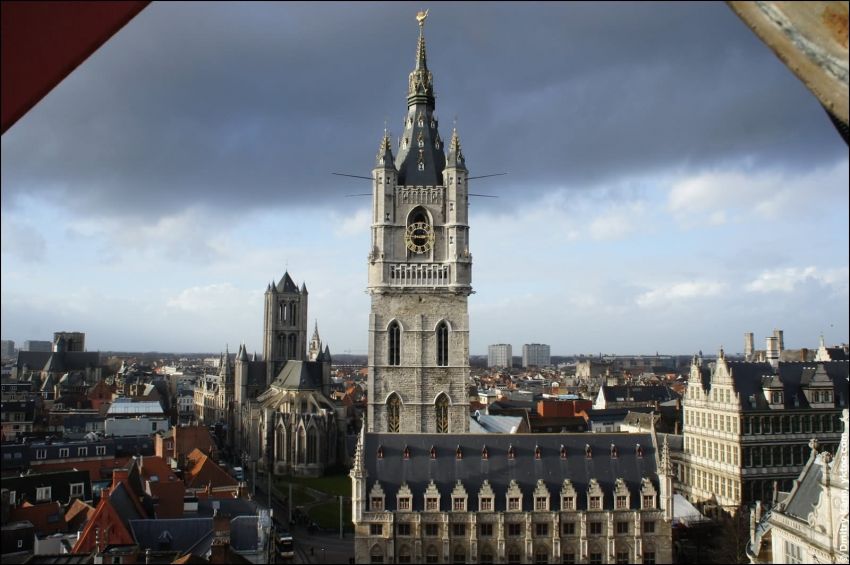
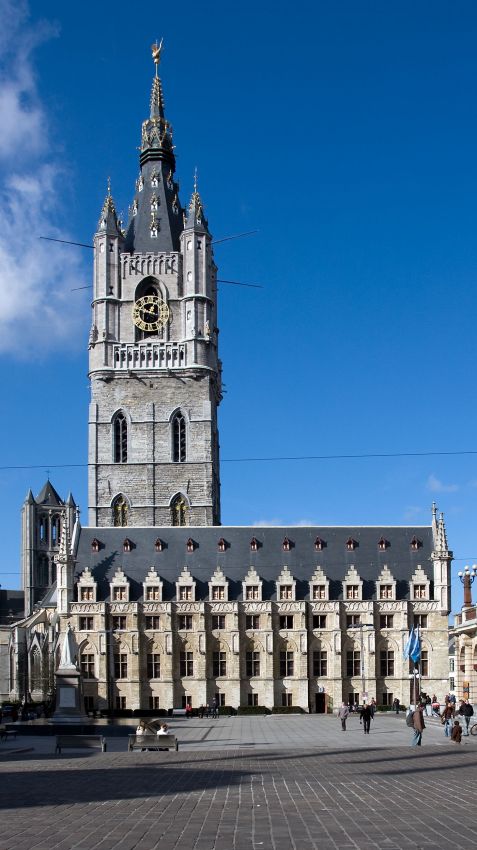
The Belfry of Ghent is one of the city's key attractions, which is hard to miss. It was built at the beginning of the 14th century, becoming one of the most remarkable structures in the district. Its height is 91 meters, and the indoor premises occupy 6 floors.
The lowest floor of the tower houses the so-called Secret Room, adorned with a cross vault. At the beginning of the 15th century, this room was occupied by the city archive. The valuable documents were kept in a heavy chest attached to the floor by a chain. Other floors of the Belfry were in the use of the caretaker, who kept order and the safety of Ghent. He always had a keen sense of the pulse of the city: he warned residents about fires and threats of attack, reported breaking news, announced the time of sunrise and sunset, as well as the beginning and end of the working day.