All content and media files are published under a Creative Commons Attribution-ShareAlike 4.0 International License (CC BY-SA 4.0)

Church of St. John the Evangelist in Liege
Liège and surrounding
Architecture, Temples, Churches
Address: Pl. Xavier-Neujean 32
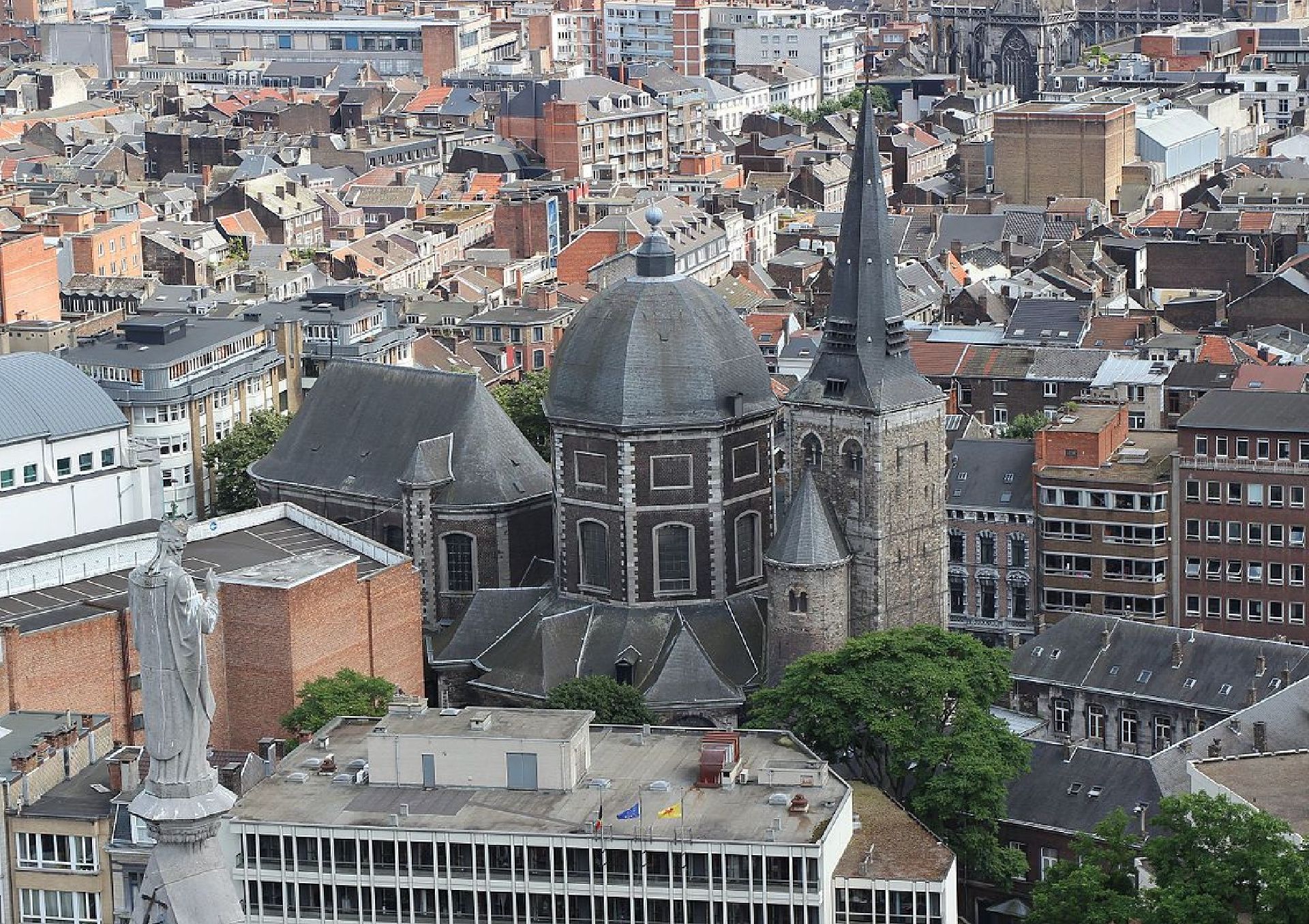
Gray and gloomy, simple and austere... This is how historians and art critics described one of the seven collegiate churches in the Belgian city of Liege. It has not changed at all: the unfriendly stone facade of the Church of St. John the Evangelist hides a rich history starting from the end of the 10th century. This ancient temple appeared thanks to the famous prince-bishop of Liege, Notker. He built the first Palace of the Prince-Bishops in St. Lambert's Square as a token of gratitude for God's help in conquering the ancient fortress of Chevremont. By the way, this church became the place of the Notker's burial. The bishop's tomb can still be seen today, though, unfortunately, there are no remains in it. According to historians, they disappeared during a severe flood at the beginning of the 18th century. The same flood caused a total reconstruction of the church in 1754, which was conducted by two architects: Jacques-Barthélemy Reynosa from Belgium and Gaetano Matteo Pisoni from Italy. From the original structure, only the ancient bell tower, built in the Romanesque style, has survived.
It is hard to say by its rather modest appearance that the Church of St. John the Evangelist is home to many unique works of art: a carved Gothic vault, tall stained glass windows from the 16th century, luxurious original Baroque furniture. Of particular interest are the wooden statues of St. John the Evangelist and the Virgin and Child, dating from 1230. There are also church relics from the late Middle Ages: valuable paintings, sculptures, the 17th-century crucifix by the great master Cornelis van der Veken, wooden medallions depicting Saints Peter and Paul by the famous Belgian sculptor Jean Del Cour. Besides, the sacristy of the church contains the original gospel of 1564 with miniatures by Robert Quercentius.
