All content and media files are published under a Creative Commons Attribution-ShareAlike 4.0 International License (CC BY-SA 4.0)

Monte Palace Tropical Garden
Madeira Island and surrounding
Monuments, Sculptures, Squares, Parks, Gardens
Address: Caminho do Monte, 174
At various training and meditations, the moderator sometimes asks you to close your eyes and imagine a corner of nature where you were happy. People who have been to the tropical garden and the Monte Palace will definitely have something to remember.
The mountain, the slopes of which are built up with red-roof white houses, is already visible from the embankment of Funchal. The cabs of the funicular float by above the houses, as in a science fiction movie. It takes only 3700 m and 15 minutes to get to Mount Monte (550 m above sea level). At the entrance to the garden, you can get a booklet which describes four routes: flora, fauna, art or mixed. Or you can just spend the whole day here. After all, nature is the main attraction of Madeira, and the Monte Palace Tropical Garden is its pearl. This land is beyond the power of words to describe. It combines exotic trees and plants, flowers and birds, garden sculptures, and ponds with red carp. You need to see, hear, breathe in and touch it yourself.
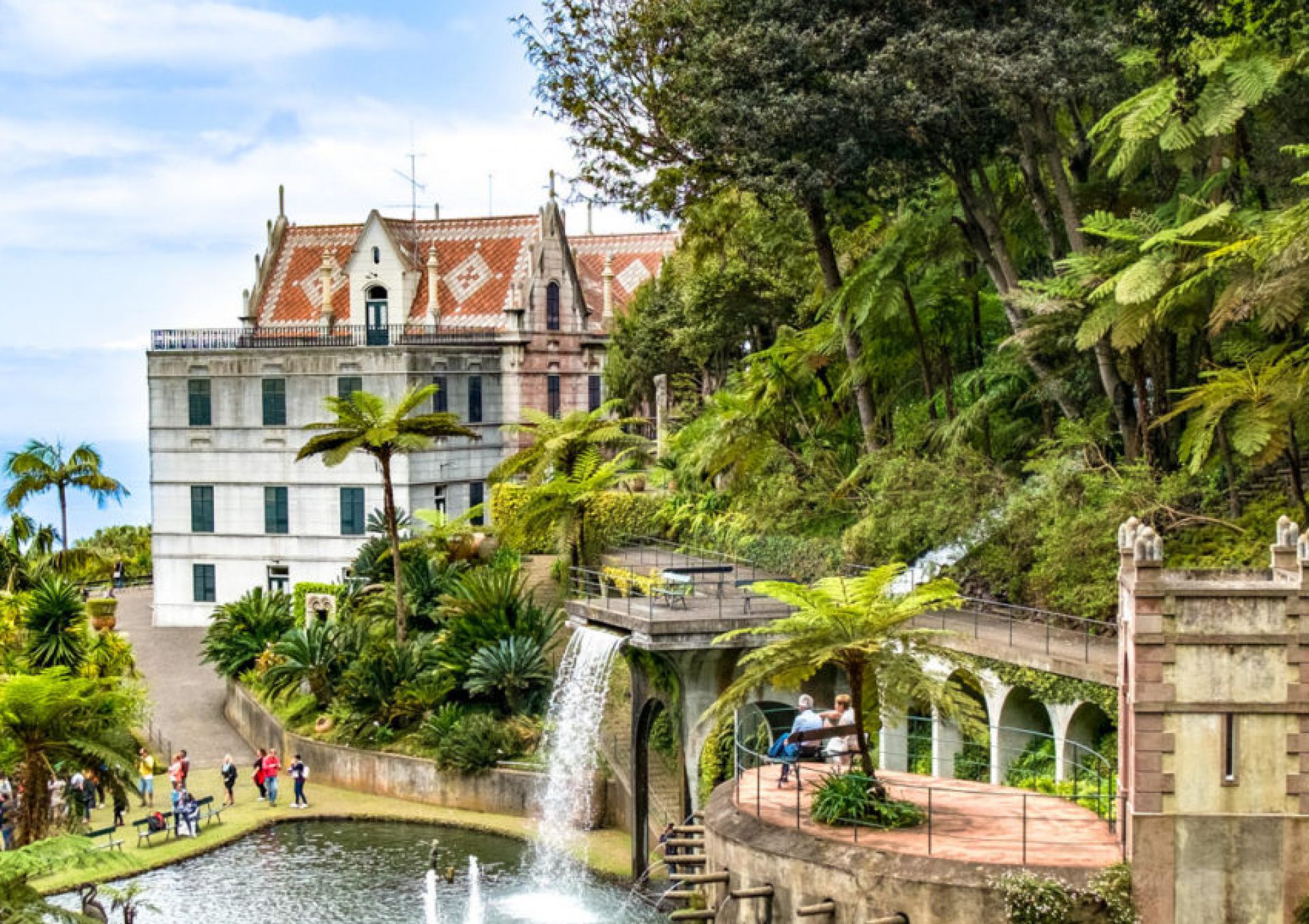
The central path leads from the entrance to the Monte Palace. Surrounded by splendid nature, it looks just like a small, cozy house. Today, there is a museum with a collection of minerals from all over the world on the first floor and African sculptures on the second. Before that, the Monte Palace was the residence of the consul and a fashionable hotel. The garden is divided into several areas. One of them is dedicated to the nature and culture of the East. The current owner of the Monte Palace is a big fan of Japanese culture, so he placed gazebos, lanterns, pagodas, bridges, and samurai sculptures in this part of the park. The other side of the palace is occupied by tropical forests, similar to the Amazon jungle, with incredible palm trees, ferns taller than a man, dragon trees, and orchids. The “art” route is presented not only by the museum exhibition but also by sculptures from different countries, ceramic panels from the 15th-20th centuries showing the history of Portugal, as well as a collection of ceramic tiles from all over the world.
At the bottom of the garden, there is a cozy observation deck overlooking the city and the ocean. After resting, you will have to go upstairs to the exit. You can return to Funchal by funicular or city bus.
