All content and media files are published under a Creative Commons Attribution-ShareAlike 4.0 International License (CC BY-SA 4.0)

Museum of Science in Portland
Portland, Oregon and surrounding
Unusual places, Museums, Galleries, Exhibitions
Address: 1945 SE Water Ave
Website:
http://omsi.edu
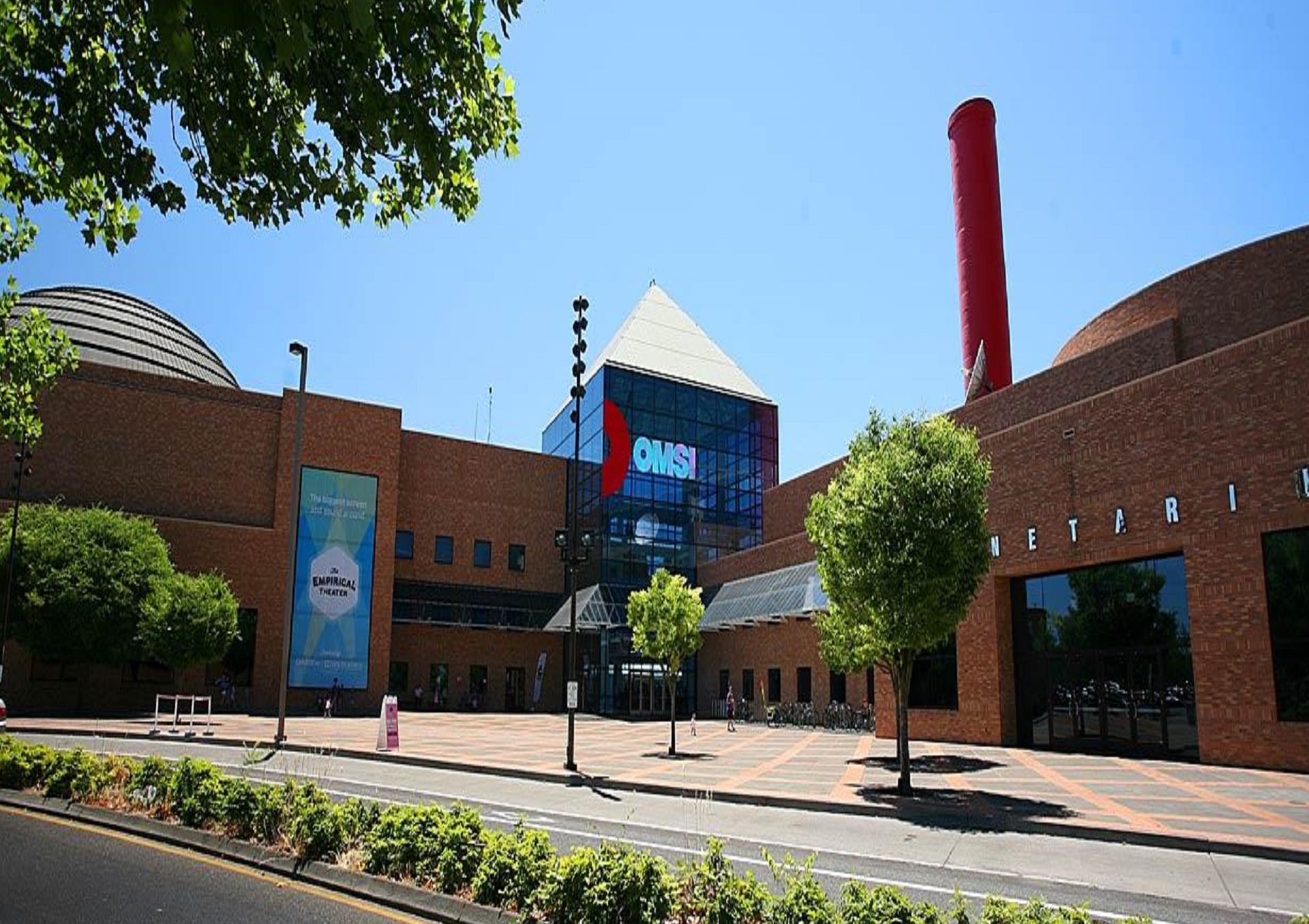
If you do not want to visit museums of antiquities, art galleries, parks, or bridges, the Oregon Museum of Science and Industry is what you need. Locals call it OMSI. It is a museum making a study of physics, chemistry and other sciences a very interesting activity. Here are five halls, eight laboratories with interactive exhibits, a planetarium, a theater, a U.S. Navy submarine, and a science playground.
At first, the OMSI was just a collection of weird artifacts keeping in the Portland City Hall building. An enthusiast Colonel Hawkins founded the City Museum in 1903. Over the next three decades, visitors were admiring the exhibits in the hallways of City Hall. They were looking to the wonders, such as a stuffed black bear. Only in the 90s, OMSI was moved to another building.
The museum is divided into several thematic rooms. The turbine hall is named after a large steam turbine earlier installed at a local power plant. Here you can see exhibits of engineering, physics, chemistry, and space travel. The laboratories of physics, chemistry, and laser holography are connected to the turbine room. Chemical laboratory is six stations allowing visitors to learn a lot about chemical reactions and take part in experiments. Among the items, there is a Van de Graaff generator (static electricity generator), motion detectors, electrical circuits, magnets, computers imitating the basic rules of physic, musical instruments. The laser holography laboratory, which is open for one hour every day, shows you 30-minute videos of hologram construction.
The Hall of Natural Sciences exhibits biology items. You can look at the development of the human fetus or age you using the computer program. There, you find a lot of animals: rats, chameleons, Madagascar hissing cockroaches, reptiles, amphibians, and insects.
The Earth Science Hall on the second floor shows geological exhibits. Visitors can learn about the life cycle of salmon and examine microscopic organisms from local ponds using a video microscope. You can also look at the digging of fossils, for example, dinosaur bones.
When you finish the tour, visit the IMAX theater or look at the stars in the planetarium. Also, there is a restaurant on the bank of the river. You can try healthy sandwiches and salads.
OMSI is located on the eastern bank of the Willamette River, next to the coastal park. The museum is open daily. The opening hours depend on the season. The entrance costs $ 14.50 for adults and $ 9.75 for children.
